
A felony is the more serious category. The legal dividing line in the U.S. is straightforward: a felony is typically punishable by more than one year of incarceration in a state or federal prison, while a misdemeanor generally carries a maximum of one year or less in a local county jail. That one-year threshold is the baseline most states and the federal system use, though the label on the charge matters just as much as the time actually served.
A few things to know immediately:
- Where you serve time: Misdemeanor sentences go to county or city jail. Felony sentences go to state or federal prison — a meaningful difference for access to programs, visitation, and reentry planning.
- Collateral consequences: Felony convictions trigger the most severe long-term effects: loss of voting rights, firearm bans, and immigration consequences. Misdemeanors carry their own collateral risks, but typically less sweeping ones.
- Your record: Both categories appear on criminal background checks unless sealed or expunged.
- Rights affected: A felony conviction can strip civil rights that a misdemeanor conviction usually leaves intact.
Pro Tip: Don't rely on a summary to determine how an offense is classified. Pull the actual statute for the charge in your state — it will state the offense label and the maximum penalty directly. That text controls, not any encyclopedia entry.
Table of Contents
- What do courts mean by infraction, misdemeanor, and felony?
- How do penalties differ between misdemeanor and felony charges?
- How does classification vary by state?
- What are common examples of misdemeanors and felonies?
- What collateral consequences follow a conviction?
- How are charges filed, upgraded, or resolved?
- Do convictions show up on background checks, and can records be sealed?
- When should you hire a criminal defense attorney?
- How to check local arrest and booking records
- Key Takeaways
- The part most people get wrong about criminal charges
- Verify local charges and booking records with Registryrecognizer
- Authoritative sources for statutes and official guidance
What do courts mean by infraction, misdemeanor, and felony?
Three tiers make up most U.S. criminal offense structures, and understanding where each sits helps you read a charge sheet or a court docket without guessing.
An infraction (sometimes called a violation) is the least serious category. It typically carries only a fine and no jail time. A traffic ticket is the most common example. Infractions generally do not create a criminal record.
A misdemeanor sits in the middle. Cornell Law's Legal Information Institute defines it as "a type of offense punishable under criminal law" with a sentence typically under 12 months in jail. Community service, probation, fines, and short jail terms are all common outcomes. Many states divide misdemeanors into classes or degrees — Class A being the most serious, Class B or C less so — with the maximum penalty dropping at each level.
A felony is the most serious classification. The federal sentencing framework under 18 U.S.C. § 3559 uses potential sentence length to define felony classes, with Class A felonies carrying the longest terms. State systems follow similar logic, though the class names and maximums vary.
One distinction worth locking in: statutory classification is the label the legislature put on the offense in the code, and it controls regardless of what sentence a judge actually imposes. A person convicted of a Class C felony who receives probation instead of prison time still has a felony conviction on their record, with every collateral consequence that comes with it.
That distinction trips up a lot of people. The charge label is set by the statute, not by how much time someone ends up serving.
How do penalties differ between misdemeanor and felony charges?
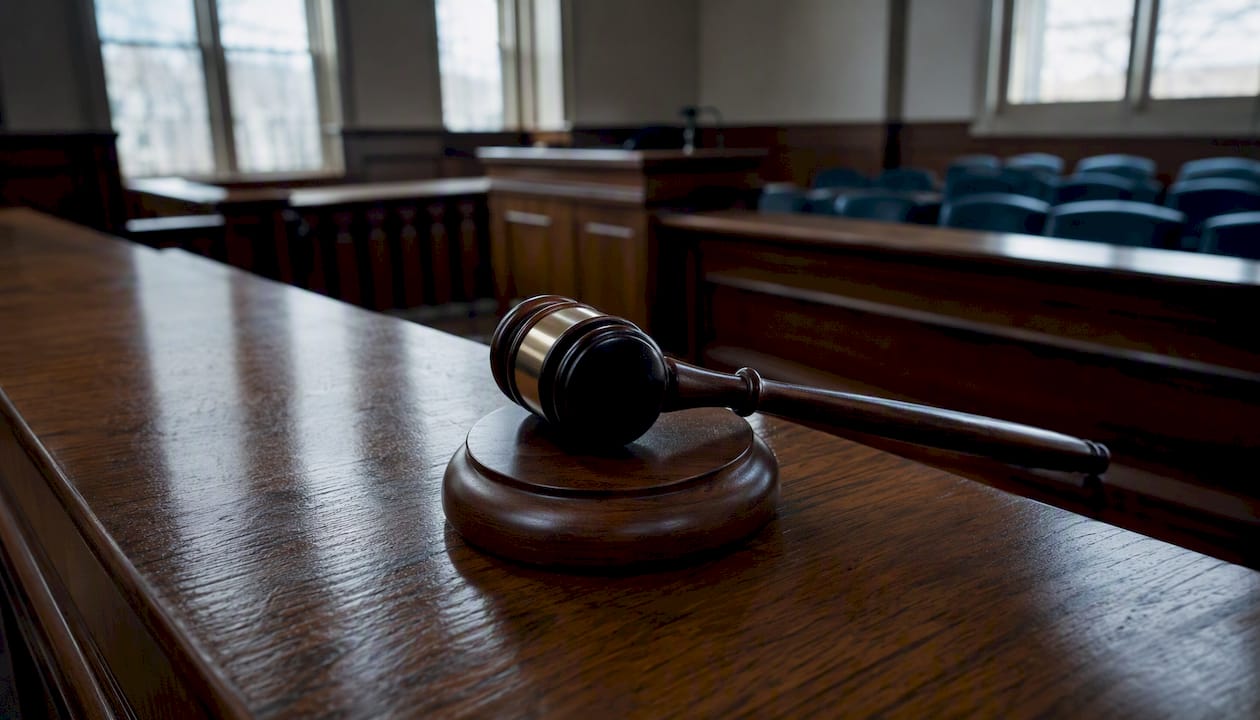
Jail vs. prison: why the location matters
County jails hold people serving short sentences or awaiting trial. State and federal prisons house people serving longer felony sentences. The practical gap between the two is significant: prisons tend to have more structured programming (vocational training, substance abuse treatment), but they also mean longer separation from family, more complex reentry logistics, and in some cases transfer to facilities far from home. Jails, by contrast, keep people closer to their communities but offer fewer rehabilitative resources.
Typical sentencing ranges by class
The table below reflects common patterns across federal classifications and typical state structures. Exact maximums vary by state.
| Classification | Typical Maximum Incarceration | Where Time Is Served | Typical Fine Range |
|---|---|---|---|
| Infraction | No jail | N/A | $500 |
| Class C Misdemeanor | 180 days | County jail | Up to $500 |
| Class B Misdemeanor | up to six months | County jail | Up to $2,000 |
| Class A Misdemeanor | up to one year | County jail | Up to $4,000 |
| Class E / Low Felony | 1–5 years | State prison | Varies by state |
| Class C / Mid Felony | 1–5 years | State prison | Varies by state |
| Class A / High Felony | Up to 25 years or life | State/federal prison | Varies by state |
Beyond incarceration, sentences often include:
- Probation: Misdemeanor probation typically runs 1–2 years with check-ins and conditions. Felony probation can run 3–5 years or longer, with stricter supervision and more conditions.
- Fines and fees: Felony fines are generally higher and may include restitution to victims.
- Supervised release: Federal felony cases often include a period of supervised release after prison, adding another layer of oversight post-sentence.
- Community service: More common in misdemeanor resolutions, though courts can order it for felonies too.
Pro Tip: Statutory maximums rarely reflect what defendants actually receive. Sentencing guidelines, plea agreements, and judicial discretion all push outcomes below the ceiling. But the conviction label stays fixed — a felony plea to a reduced sentence is still a felony.
How does classification vary by state?
The one-year rule is a useful starting point, but states differ significantly in how they sort offenses into classes, what they call those classes, and what the maximums are at each level.
Virginia uses four misdemeanor classes. A Class 1 misdemeanor carries up to 12 months in jail and a $2,500 fine. Class 4 misdemeanors carry only a fine. Felonies run from Class 6 (the least serious, with 1–5 years) up to Class 1 (life or death).
Texas uses a different structure entirely. Misdemeanors are Class A (up to 1 year, $4,000 fine), Class B (up to 180 days, $2,000 fine), and Class C (fine only, up to $500). Felonies run from State Jail Felony (180 days to 2 years in a state jail facility) up through capital felony.
Connecticut labels its misdemeanors as Class A, B, C, and D, with Class A carrying up to 1 year. Its felony classes run from Class A (up to 25 years or life) down to Class D (1–5 years).
New York is worth noting because its Class A misdemeanor carries up to 1 year in jail, while Class B misdemeanors max out at 3 months. Unclassified misdemeanors often carry probation terms.
When checking how an offense is classified in your state, look for these four things in the statute:
- The explicit label ("misdemeanor" or "felony" and the class or degree)
- The maximum term of incarceration
- Any statutory enhancements (prior convictions, use of a weapon, victim characteristics)
- "Wobbler" language — phrases like "may be punished as either a felony or misdemeanor" signal that the prosecutor has discretion
State code portals (linked in the sources section below) let you search by statute number or offense name. Official court websites often publish charge-specific sentencing information as well.
What are common examples of misdemeanors and felonies?
Typical misdemeanors
- Petty theft (below a dollar threshold, often $500–$1,000 depending on the state)
- Simple assault (no weapon, no serious injury)
- Public intoxication
- First-offense DUI in most states, absent aggravating factors
- Trespassing
- Disorderly conduct
- Minor in possession of alcohol
- Vandalism below a damage threshold
These offenses land in the misdemeanor category because the potential harm is limited, the conduct is less severe, or the legislature has specifically set a lower maximum penalty.
Typical felonies
- Murder and manslaughter
- Rape and sexual assault
- Armed robbery
- Serious drug trafficking (quantity and type of substance matter)
- Arson
- Kidnapping
- Felony assault (with a weapon or causing serious bodily injury)
- Burglary (as distinct from trespassing)
Borderline cases: when charges flip
Several common offenses sit right on the line between categories. A first-offense DUI is typically a misdemeanor, but add an injury, a child passenger, or a prior conviction and it can become a felony in most states. Theft crosses from misdemeanor to felony once the value of stolen property exceeds the state's threshold. Domestic violence assault that would be a misdemeanor on first offense can become a felony on a second or third charge in many jurisdictions.
Drug possession is one of the most variable categories. A small amount of a Schedule II controlled substance might be a misdemeanor in one state and a felony in another. The quantity, substance type, and intent (personal use vs. distribution) all factor into how the charge is filed.
Pro Tip: Aggravating facts change everything. A prosecutor who can prove a weapon was present, a victim was vulnerable, or the defendant has a prior record can often elevate a charge before it ever reaches a courtroom. Early legal counsel is the best way to counter that before charging decisions are finalized.
What collateral consequences follow a conviction?
The sentence is only part of the picture. Both misdemeanor and felony convictions carry consequences that extend well beyond the courtroom, but felonies are in a different category for severity and scope.

Voting rights: Felony convictions result in voting suspension in most states. Some states restore rights automatically after release; others require a waiting period or a formal petition. Misdemeanor convictions rarely affect voting rights.
Firearm possession: Under 18 U.S.C. § 922(g)(1), a felony conviction triggers a federal lifetime ban on firearm possession. A conviction for possession of a firearm by a felon is itself a felony, compounding the original conviction. Misdemeanor convictions generally do not trigger this ban, with the notable exception of misdemeanor domestic violence convictions under federal law.
Employment: Felony convictions frequently disqualify applicants from jobs requiring security clearances, government positions, or work with vulnerable populations. Misdemeanors can still appear on background checks and affect hiring, particularly in licensed professions.
Professional licensing: Nurses, teachers, attorneys, contractors, and many other licensed professionals face license denial or revocation after felony convictions. Some licensing boards also act on serious misdemeanors.
Housing: Landlords routinely screen for criminal records. Felony convictions, especially for violent or drug offenses, often disqualify applicants from private rentals and public housing programs.
Immigration: This is where the stakes get highest for noncitizens. Certain felony convictions qualify as "aggravated felonies" under federal immigration law, triggering mandatory deportation with no discretion for an immigration judge. Even some misdemeanor convictions can trigger removal if they involve moral turpitude or controlled substances. The immigration consequences of a plea deal are often more permanent than the criminal sentence itself.
Pro Tip: Before accepting a plea deal, ask your attorney specifically about the collateral consequences for your profession and immigration status. A plea that looks favorable on paper can cost a professional license or trigger deportation.
How are charges filed, upgraded, or resolved?
Filing: how cases begin
Misdemeanor cases often start with a citation or a complaint filed directly by the prosecutor, without a grand jury. Many defendants receive a summons to appear rather than an arrest. Felony cases follow a different path. In federal court and many state courts, a grand jury reviews evidence and issues an indictment before charges are formally filed. Some states allow prosecutors to file a "bill of information" instead, skipping the grand jury for certain felonies.
Prosecutorial discretion and wobblers
Identical conduct can be charged as a misdemeanor or a felony depending on the prosecutor's assessment of the facts, the defendant's history, and the applicable statute. "Wobbler" offenses are explicitly written to give prosecutors that choice. A prosecutor who sees a first-time offender with no priors may charge a wobbler as a misdemeanor; the same facts with a prior record might produce a felony charge.
A simplified timeline from arrest to disposition
Misdemeanor path:
- Arrest or citation
- Arraignment (plea entered, bail set)
- Pretrial motions and discovery
- Plea negotiation or trial
- Sentencing
Felony path:
- Arrest and booking
- Initial appearance / bail hearing
- Preliminary hearing or grand jury indictment
- Arraignment on the indictment
- Pretrial motions, discovery, and plea negotiations
- Trial (jury trial right is stronger for felonies)
- Sentencing
- Possible appeal or post-conviction relief
Felony cases take longer, cost more, and involve more procedural steps. Jury trial rights are constitutionally guaranteed for serious criminal charges; for petty offenses (typically those carrying less than six months), the right to a jury trial is more limited under federal constitutional standards, though states may provide broader rights.
Early steps for defendants and families
- Document everything: dates, officers involved, what was said, and any witnesses present.
- Contact a criminal defense attorney before making any statements to police or prosecutors.
- Avoid discussing the case on social media or with anyone other than your attorney.
- Gather any evidence that supports your account (receipts, messages, surveillance footage).
- If a loved one is in custody, confirm the booking location and charges through the jail or a records database.
Do convictions show up on background checks, and can records be sealed?
Both misdemeanors and felonies typically appear on criminal history background checks unless a court has sealed or expunged the record. Private background check services pull from public court records, county databases, and state repositories, so a conviction from years ago can surface in a standard employment or housing screen.
The rules for sealing or expungement vary widely. Many states allow sealing or expungement under certain conditions, with waiting periods that often run 1–5 years for some misdemeanors and longer for felonies. Violent crimes, sex offenses, and offenses involving minors are commonly excluded from expungement eligibility in most states.
Three terms get confused regularly:
- Sealing: — The record still exists but is hidden from most public searches. Law enforcement and some licensing boards can still access it.
To find out whether a specific conviction is eligible in your state, check the state court's self-help page or the state legislature's code portal (linked in the sources section). Most state courts publish the petition forms online. Filing is typically done in the court where the conviction occurred.
Common questions about records:
Does an arrest without a conviction appear on a background check? Often yes, unless the arrest record has been sealed. Arrest records are separate from conviction records, and many background check services include both.
Can a felony be reduced to a misdemeanor after sentencing? In some states, yes. California's Penal Code § 17(b), for example, allows certain wobbler felonies to be reduced to misdemeanors after successful probation. Other states have similar provisions. An attorney can advise whether this applies to a specific conviction.
When should you hire a criminal defense attorney?
The short answer: as early as possible. The longer answer involves a few clear triggers that make professional legal help not optional but necessary.
Hire a defense attorney when:
- You are facing any felony charge
- Incarceration is a realistic possibility, even for a misdemeanor
- You are not a U.S. citizen and any criminal charge is on the table
- Your professional license could be affected
- You have a prior record that could elevate the current charge
- A plea offer has been made and you are unsure whether to accept it
- You were questioned by police and made statements without counsel present
Questions to ask during a first consultation
- How many cases like mine have you handled in this court?
- What is your read on the likely outcome given the facts?
- Are there grounds to challenge the charge or the evidence?
- What are the collateral consequences specific to my situation (immigration, licensing)?
- What does your fee structure look like, and what does it cover?
- How do you communicate with clients between court dates?
- Is a plea deal likely, and what would you recommend?
Pro Tip: The first consultation is also your chance to assess the attorney's familiarity with the local court. A defense attorney who knows the prosecutors and judges in your county can often negotiate outcomes that an out-of-area attorney cannot.
How to check local arrest and booking records
Arrest and booking records are public in most U.S. jurisdictions, and knowing how to read them correctly saves time and prevents misinterpretation.
Step-by-step: searching county records
- Read the charge field carefully — The charge listed at booking reflects what law enforcement alleged at the time of arrest. It may not match the final charge the prosecutor files.
What online records can and cannot tell you
Online arrest databases, including Registryrecognizer, reflect publicly available booking data. They are updated regularly and include charge descriptions, booking dates, jail locations, and in many cases bond information. A felony possession charge, for example, appears with the statutory label, the booking facility, and the date of arrest.
What they cannot show: sealed or expunged records, charges that were reduced after booking, or final court dispositions that haven't been updated in the public record. Court dockets, accessible through the state court's online portal, are the authoritative source for final case outcomes.
Pro Tip: Cross-check any online arrest record against the court docket before drawing conclusions. A charge that appears serious at booking may have been reduced to a misdemeanor or dismissed entirely by the time the case resolved.
Key Takeaways
The core legal dividing line between a misdemeanor and a felony is one year of potential incarceration: misdemeanors max out at one year in county jail, felonies carry more than one year in state or federal prison, and the conviction label controls collateral consequences regardless of actual time served.
| Point | Details |
|---|---|
| The one-year rule | Felonies carry potential incarceration over one year in prison; misdemeanors cap at one year in county jail. |
| Collateral consequences | Felonies trigger voting suspension, federal firearm bans, and immigration risks that misdemeanors typically do not. |
| Records and expungement | Both categories appear on background checks; sealing or expungement eligibility varies by state and offense type. |
| State variation matters | Virginia, Texas, Connecticut, and New York each use different class structures with different maximums — always check the local statute. |
| Registryrecognizer | Search county-level arrest and booking records at Registryrecognizer to verify charges, booking dates, and jail locations before taking action. |
The part most people get wrong about criminal charges
The most persistent misconception about the misdemeanor vs. felony distinction is that it tracks how much time someone actually served. It does not. A person who pleads guilty to a felony and receives probation with no prison time still carries a felony conviction for every purpose that matters: background checks, firearm rights, voting, immigration, and professional licensing. The statutory label is fixed at the moment of conviction, not adjusted by the sentence.
The second misconception is that misdemeanors are essentially harmless. They are not. A misdemeanor domestic violence conviction triggers a federal firearm ban under the Lautenberg Amendment. A misdemeanor drug conviction can affect federal student loan eligibility. A misdemeanor on a background check can cost someone a job offer or a lease. The gap between a felony and a misdemeanor is real and significant, but treating a misdemeanor as a non-event is a mistake that people pay for years later.
The practical priority when facing any criminal charge is the same regardless of category: get legal advice before entering any plea, verify what the disposition actually shows on the court docket, and think through the collateral consequences before agreeing to anything. The sentence is often the smallest part of the long-term cost.
Verify local charges and booking records with Registryrecognizer
When you need to confirm whether a charge appears in county records, what the booking details show, or how a specific offense is labeled in a local database, Registryrecognizer gives you direct access to that information without a courthouse visit.
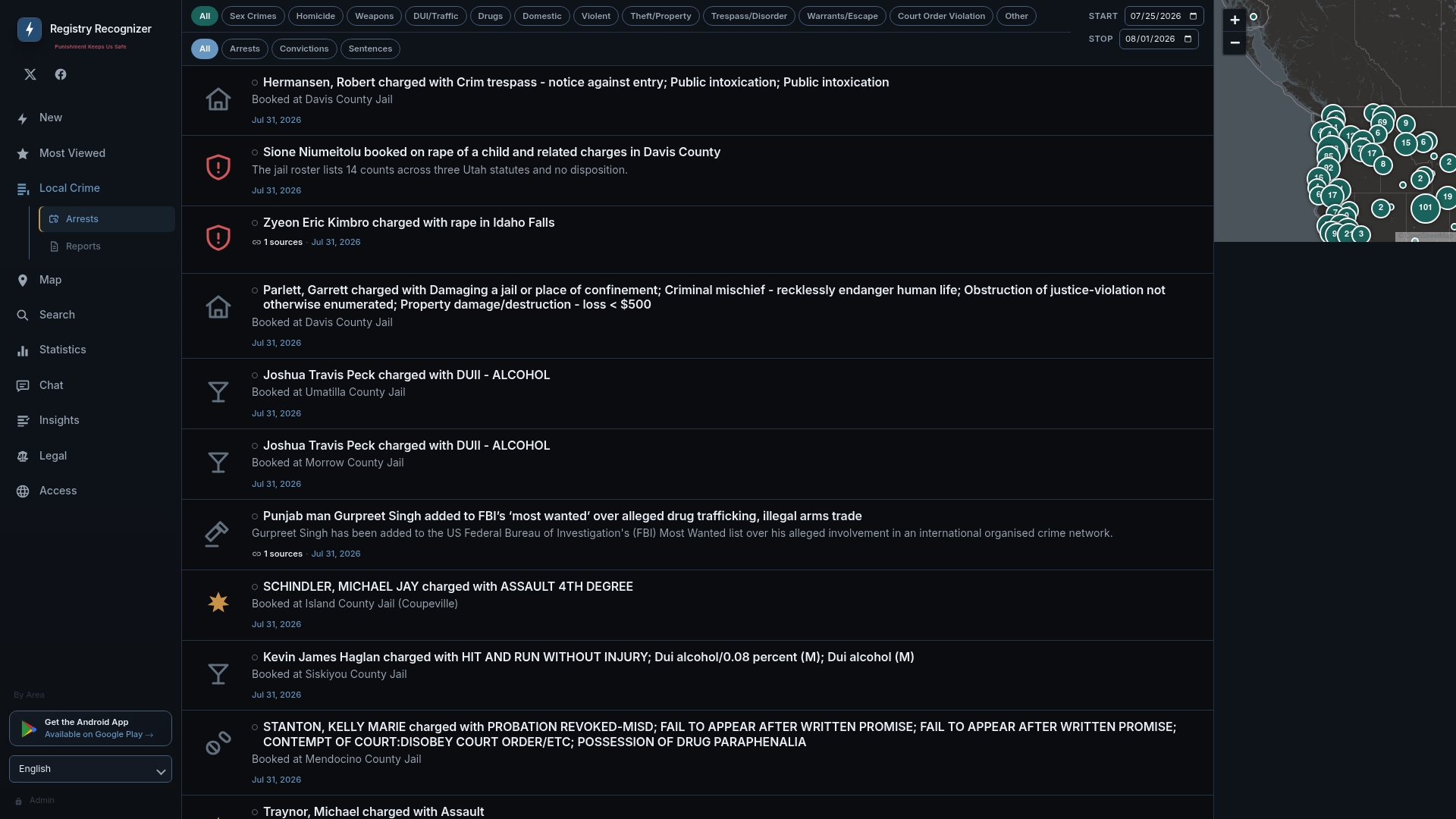
The database covers county-level arrest and booking records across multiple jurisdictions, with searchable fields for charge descriptions, booking dates, jail locations, and bond status. You can look up a felony probation violation or a misdemeanor battery booking and see exactly how the charge is labeled in the public record. Records are updated regularly, making Registryrecognizer a practical first stop for citizens, journalists, and legal professionals who need current booking information fast.
One important note: online records are informational. They reflect what was alleged at booking, not necessarily the final court outcome. Sealed records will not appear. For dispositions and official case status, the court docket is the authoritative source. For legal interpretation of any charge, consult a licensed defense attorney.
Search county arrest records at Registryrecognizer to get the booking details you need.
Authoritative sources for statutes and official guidance
When you need to verify how an offense is classified, these are the sources worth bookmarking:
- Cornell Law LII — Misdemeanor (Wex): Plain-language definitions of misdemeanor and related terms, with links to federal statutes. Good starting point for understanding baseline definitions.
- Cornell Law LII — 18 U.S.C. § 3559 (Federal Sentencing Classifications): The federal statute that defines felony and misdemeanor classes by potential sentence length. Authoritative for federal charges.
- Cornell Law LII — State Criminal Code Table: Links to each state's criminal code, organized by state. Use this to find the specific statute for an offense in your jurisdiction.
- Virginia Code — Title 18.2, Chapter 1, Article 3: Example of a state code showing how Virginia structures its misdemeanor and felony classes. Useful as a model for reading other state codes.
- New York Courts — Types of Criminal Cases: Clear breakdown of New York's misdemeanor and felony classes from the official court system.
- Lumen Learning — 1.4 Classification of Crimes: Academic overview of crime classification, including the jail vs. prison distinction and civil consequences of felony convictions.
- Registryrecognizer — County Arrest Records: Searchable database of county-level booking records, charge descriptions, and jail locations for public verification of arrest information.
Quick tips for searching state codes:
Search by statute number if you have it (e.g., "Penal Code § 459" for California burglary). If you only know the offense name, search the state code portal by keyword and look for the penalty section, which will state the class or maximum term. For disposition confirmation, use the state court's online docket search, which is separate from the arrest record database and reflects what actually happened in court.
This article provides general legal information, not legal advice. Laws vary by state and change over time. Confirm current rules with the relevant state statute or a licensed attorney in your jurisdiction.
Recommended
- Bessette, Bridget Ann charged with FELONY POSSESSION SCH II CS · Registry Recognizer
- Freddy Lopez Molina charged with PC 29800(A)(1) - POSSESSION OF FIREARM BY A FELON (OLD CODE 12021(A)(1) · Registry Recognizer
- KING, KEION JACQUESE charged with CC24-0246 PROBATION VIOLATION - FELONY · Registry Recognizer
- JACKSON , KEVIN FREDRIC charged with 16-11-90(b) - ELECTRONIC TRANSMISSION/POST OF VIDEO OR PHOTO DEPICTING NUDITY OR SEXUALLY EXPLICIT CONDUCT W/O CONSENT - M · Registry Recognizer