
Probation is a court-ordered period of community supervision imposed instead of (or alongside) incarceration; parole is conditional early release from prison granted by a parole authority after an offender has served part of their sentence. That single distinction, confirmed by both the Bureau of Justice Statistics and the Robina Institute of Criminal Law and Criminal Justice, drives nearly every practical difference in who supervises you, what rights you have at a hearing, and what happens when something goes wrong.
Three immediate steps worth knowing:
- Check your state's parole board or DOC website for supervision rules specific to your offense and jurisdiction.
- Request your case records through the county court clerk or a public records database like Registryrecognizer to confirm charges, disposition status, and any supervision flags.
- Consult a criminal defense attorney if you are facing a violation report, a revocation hearing, or any new arrest while under supervision.
Pro Tip: The difference between probation and parole is not just semantic. It determines who has the power to send you back to custody and what procedural protections you get before that happens. Know which one applies to your situation before your next check-in.
Key Takeaways
Probation is imposed by a judge at sentencing; parole is granted by a parole board after prison time, and the decision-maker difference determines your procedural rights and the consequences of any violation.
| Point | Details |
|---|---|
| Core legal distinction | Probation replaces or supplements incarceration; parole is early release from a sentence already being served. |
| Who decides | A judge imposes probation; a parole board grants parole, with different hearing rights at each. |
| Felony probation length | Five years is the most common maximum in states reviewed by the Robina Institute; some allow lifetime terms. |
| Violation consequences | Probation violations return to the sentencing judge; parole revocations can mean serving the full remaining sentence. |
| Practical next step | Check your state DOC or parole board site for rules, document all compliance, and consult an attorney at the first sign of a violation report. |
Table of Contents
- How does probation work across U.S. jurisdictions?
- How does parole work, and who decides?
- Probation vs. parole: how do the two actually compare?
- How do eligibility and supervision length vary by state?
- What conditions apply, and what rights do you keep?
- What happens when you violate probation or parole?
- How to check supervision status and find public records
- When should you get a lawyer?
- Why the probation/parole distinction matters more than most people realize
- Sources
How does probation work across U.S. jurisdictions?
Probation is a sentence, not a reward. A judge imposes it at sentencing, either as a standalone alternative to prison or as a condition added to a suspended sentence. The U.S. District Court for South Dakota describes it plainly: probation is court-imposed community supervision in place of incarceration.
Day-to-day, probation means regular meetings with a probation officer, usually monthly or more often in the early stages. Officers verify employment, conduct home visits, administer drug and alcohol tests, and confirm compliance with any special conditions the judge ordered. Those conditions commonly include:
- Reporting to a probation officer on a set schedule
- Submitting to random drug and alcohol testing
- Maintaining employment or enrollment in school
- Paying supervision fees, fines, court costs, and restitution
- Observing curfews and travel restrictions
- Avoiding contact with co-defendants or victims
- Completing community service or treatment programs
Supervision fees vary by state and can add real financial pressure on top of fines and restitution. Employment and housing applications often ask about conviction and supervision status, so probation carries collateral consequences beyond the courthouse.
State rules differ sharply. The Robina Institute's cross-state review found that five years is a common maximum for felony probation in many states, but some states allow lifetime probation for serious offenses. Early termination is possible in most jurisdictions, though some require full payment of fines and fees before a judge will grant it.
When a violation is alleged, the case goes back to the sentencing judge. That procedural fact matters: you are in a courtroom, with a judge who knows your case, and you generally have the right to counsel.
Pro Tip: Keep a personal log of every check-in, drug test, payment, and program attendance. If a probation officer's records and yours ever conflict, your documentation is the only thing that can protect you at a violation hearing.
How does parole work, and who decides?
Parole is not a sentence. It is a conditional early release from a sentence already being served. A parole board, not a judge, decides whether and when to grant it, based on factors like institutional behavior, program participation, and an assessment of public safety risk. Nolo summarizes the standard criteria: time served, conduct in prison, and the board's judgment about re-entry plans.
Several distinct types of parole exist across U.S. states:
- Discretionary parole: The most common type; a parole board reviews the case and votes on release.
- Mandatory parole: Triggered automatically when an inmate reaches a statutory release date set by law.
- Medical or geriatric parole: Available in some states for seriously ill or elderly inmates who pose minimal public safety risk.
- Juvenile parole: Applies to individuals released from juvenile facilities under supervision.
Virginia's parole system, documented in the Virginia State Crime Commission's 2022 report, illustrates how these categories operate at the state level and how eligibility thresholds differ by offense type. Several states, including Virginia itself, have significantly restricted or effectively abolished discretionary parole for many offenses, requiring inmates to serve a fixed percentage of their sentence before any release consideration.
Once released, a parolee's daily supervision looks similar to probation: regular officer meetings, drug testing, curfews, travel restrictions, and restitution payments. The critical difference is context. Parole follows incarceration, and a revocation can mean serving the remainder of the original sentence, not just a short jail stay.
Probation vs. parole: how do the two actually compare?
The table below covers the dimensions that matter most when you are trying to understand your own situation or someone else's.
| Dimension | Probation | Parole |
|---|---|---|
| When it occurs | At sentencing, before or instead of prison | After serving part of a prison sentence |
| Decision-maker | Judge | Parole board |
| Supervision | Probation officer; conditions set by court | Parole officer; conditions set by board |
| Violation process | Hearing before sentencing judge | Hearing before parole board |
| Eligibility | Determined by offense, criminal history, and judge's discretion | Determined by time served, offense type, and board criteria |
| Length / early termination | Varies by state; common felony max is five years; early termination requires court approval | Runs until original sentence expires; board may discharge early |
| Costs / fees | Supervision fees, fines, restitution | Supervision fees, restitution; sometimes program costs |
Four distinctions that carry the most practical weight:
- Who holds the power. A judge can be appealed; a parole board decision is harder to challenge and often has fewer procedural protections.
- What a violation costs you. A probation violation can result in a jail stay or modified conditions; a parole revocation can mean serving years of remaining sentence time.
- When supervision starts. Probation begins the day of sentencing. Parole begins the day you walk out of prison.
- Conditions overlap, but context does not. As the Bureau of Justice Statistics notes, the day-to-day rules can look nearly identical, but the procedural context and the stakes of a violation differ significantly.
How do eligibility and supervision length vary by state?
This is where the "it depends" answer is actually the honest one. Five years is the modal maximum for felony probation across the states studied, but that figure masks wide variation in how judges apply it and whether early termination is realistic.
For parole, eligibility depends on the offense, the sentence structure, and state law. States that have abolished discretionary parole for most felonies still retain it for specific categories.
Key ranges to know:
- Misdemeanor probation generally lasts a few years in most states
- Felony probation often ranges from a few to several years, with some states allowing much longer or lifetime terms for serious offenses
- Parole eligibility varies substantially by state, often requiring serving a significant portion of the sentence before release consideration.
To find the rules that apply to a specific case, go directly to the state's department of corrections website or the state parole board's public-facing pages. State legislature websites publish the relevant statutes, usually under criminal procedure or corrections codes. The Robina Institute's state-by-state data is a useful secondary reference for comparing jurisdictions.
What conditions apply, and what rights do you keep?
Both probation and parole come with a standard set of conditions, and violating any one of them can trigger a revocation proceeding. Common requirements include:
- Regular check-ins with a supervising officer (in person or by phone)
- Random drug and alcohol testing
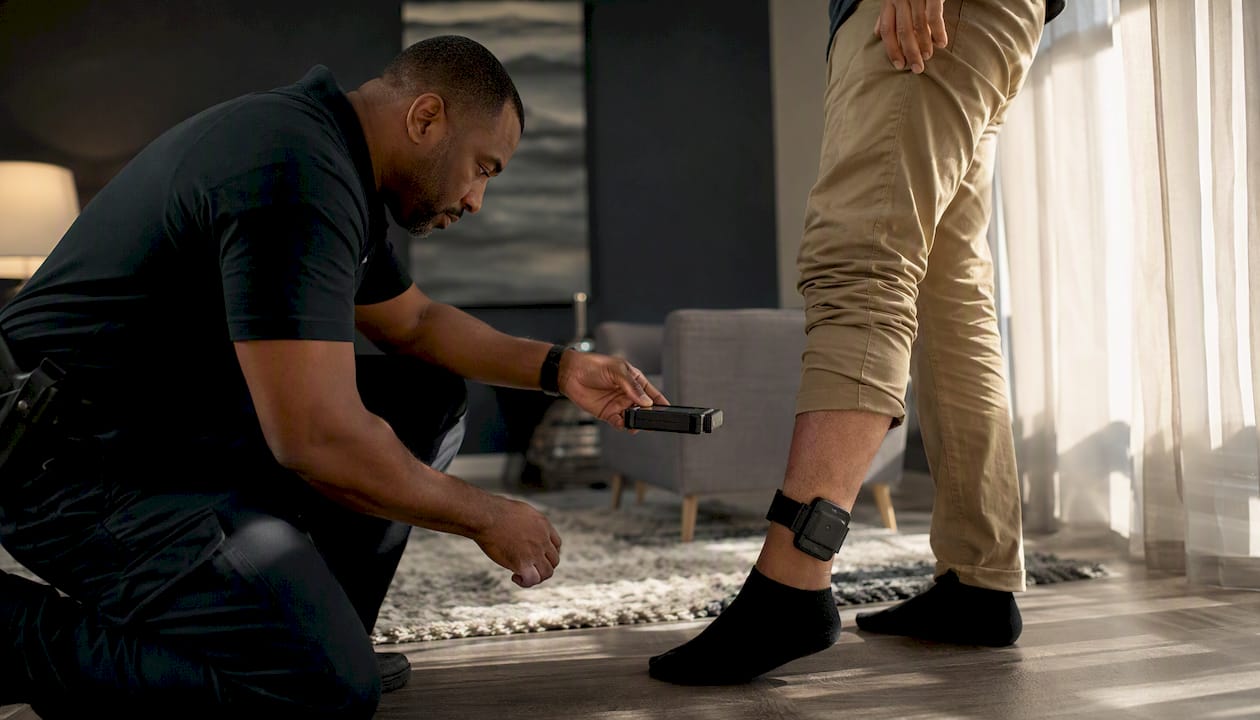
- Electronic monitoring (ankle bracelet) in higher-risk cases
- Travel restrictions, often limited to the county or state
- No contact with certain individuals (victims, co-defendants)
- Restitution payments on a court-ordered schedule
- Participation in treatment, counseling, or educational programs
The financial burden is real. Supervision fees, drug testing costs, and restitution can total hundreds of dollars per month. Missing a payment can itself constitute a violation, creating a cycle that is hard to break without stable employment. And employment is harder to secure when a background check reveals an active supervision status.
On the constitutional side, Justia's criminal law overview explains that people under supervision have reduced Fourth Amendment protections. Officers can often search a supervised person's home or vehicle without a warrant, particularly when the supervision agreement includes a search condition. Courts have generally upheld these searches as a condition of the supervised release, though the exact scope varies by state and by the specific terms of the order.
At a violation hearing, you have the right to notice of the alleged violation, the right to be heard, and in most jurisdictions the right to counsel. The standard of proof is lower than at a criminal trial, which means the government does not need to prove a violation beyond a reasonable doubt.
Pro Tip: If an officer asks to search your home or vehicle, ask calmly whether the search is required under your supervision conditions. Do not resist, but document the date, time, officer name, and what was searched immediately afterward. That record matters if the search becomes part of a violation proceeding.
What happens when you violate probation or parole?
Violations fall into two categories. Technical violations are breaches of supervision conditions: a missed appointment, a failed drug test, a curfew break, or an unpaid fee. New criminal charges are a separate category and almost always trigger more serious consequences.
Here is how the process typically unfolds after an alleged violation:
- Report. The supervising officer documents the alleged violation and reports it to the court (probation) or the parole board (parole).
- Warrant or hold. A judge may issue a probation violation warrant or a parole hold, which can result in immediate detention without bail while the hearing is pending.
- Preliminary hearing. For parole, a preliminary hearing determines whether probable cause exists to hold the person. Probation procedures vary by state but often skip this step.
- Revocation hearing. The full hearing takes place before the sentencing judge (probation) or the parole board (parole). Evidence is presented, the supervised person can respond, and a decision is made.
- Possible outcomes. These range from a warning or increased supervision to a short jail stay, modified conditions, or full revocation. For parole, revocation typically means returning to prison to serve the remaining sentence. For probation, the judge may impose the original suspended sentence.
LawInfo's guidance on parole and probation consistently recommends retaining counsel for any alleged violation, and for good reason: the procedural stakes are high even when the underlying violation seems minor. A parole violation arrest record can also affect future employment and housing applications independently of the revocation outcome.
If you are arrested while on supervision and need to understand bail options quickly, resources on felony bail amounts and procedures can clarify what to expect in the immediate hours after booking.
Pro Tip: Contact a defense attorney before the revocation hearing, not after. An attorney can sometimes negotiate a sanction short of full revocation, particularly for a first technical violation with a clean compliance record up to that point.
How to check supervision status and find public records
Verifying whether someone is currently on probation or parole, or finding records tied to a supervision violation, takes a few specific steps.
- Check the state DOC or parole board lookup. Most state departments of corrections maintain a public inmate and supervision search tool. Search by name or inmate number to see custody status, release date, and whether the person is under active supervision.
- Search county court records for probation terms. Probation is a court order, so the sentencing court's public docket will show the term length, conditions, and any modification or violation filings. Many states offer online case search portals through the state judiciary's website.
- Use Registryrecognizer for arrest and booking records. Registryrecognizer indexes arrest records, booking details, charges, and jail locations across multiple counties, updated regularly. It is a practical starting point for finding whether someone has been booked on a post-release supervision violation or a new charge while under supervision. Note that Registryrecognizer reflects arrest and booking data, not official court-certified documents, and sealed or expunged records will not appear.
What public records typically show:
- Booking date, charges, and offense category
- Jail or detention facility location
- Disposition status (if updated by the county)
- Whether the charge is tied to a supervision violation
What they do not show:
- Sealed, expunged, or juvenile records
- Internal parole board notes or risk assessments
- Real-time custody status in all jurisdictions
Timing and completeness vary by county. Rural counties often update records less frequently than urban ones, and some states restrict what disposition information is publicly accessible. The BJS and Robina Institute both note that data gaps are a persistent challenge in tracking supervision outcomes nationally.
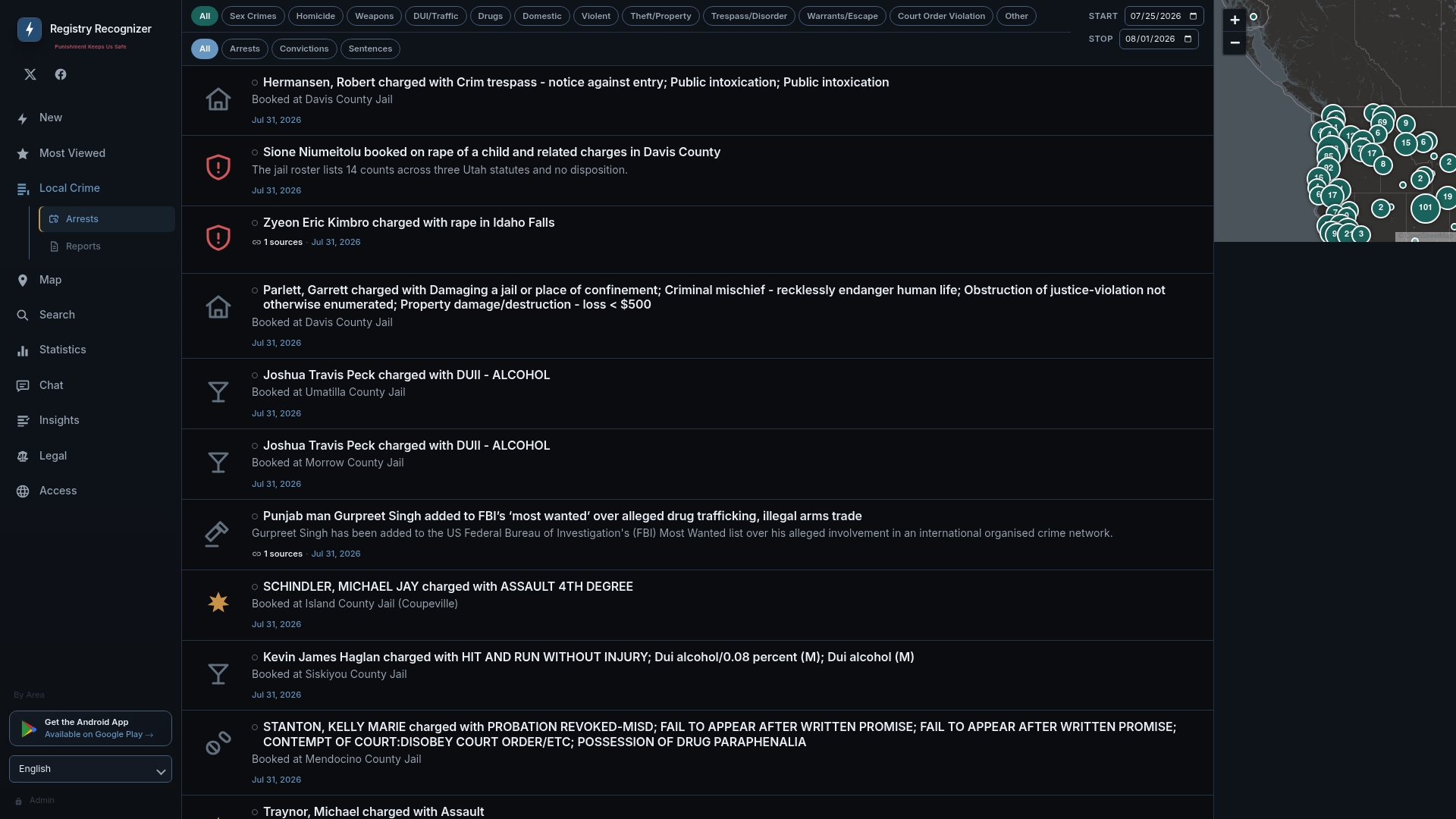
Registryrecognizer's database covers arrest and booking records across counties, giving you a fast, searchable starting point when you need to verify charges, locate a booking record, or understand the scope of someone's criminal history. Search by name or county at Registryrecognizer.
When should you get a lawyer?
Get legal help immediately if any of the following apply:
- You have been arrested while on probation or parole
- Your supervising officer has filed a violation report
- You are facing a revocation hearing
- You have a new criminal charge that could trigger a supervision violation
- You are disputing restitution amounts or fee calculations
- You believe a technical violation was recorded in error
A defense attorney in this context does more than show up at a hearing. They can negotiate with the supervising officer or prosecutor before a formal hearing is scheduled, argue for alternatives to revocation (such as treatment or increased reporting), challenge the evidence supporting the alleged violation, and advise on how a revocation or new conviction will affect employment, housing, and future record checks.
Before meeting with a lawyer or attending a hearing, gather:
- All payment receipts for supervision fees, fines, and restitution
- Drug test results and any documentation of negative tests
- Employment records, pay stubs, or school enrollment confirmation
- Treatment or program attendance records
- Any written communications from your supervising officer
- A personal log of check-ins and compliance activities
Pro Tip: Request a copy of your supervising officer's case notes as early as possible. In many jurisdictions, you or your attorney can obtain these through a public records request or discovery. Knowing what the officer has documented gives you the chance to correct errors before the hearing.
Why the probation/parole distinction matters more than most people realize
The conventional framing treats probation and parole as two versions of the same thing: supervision in the community instead of a cell. That framing is wrong in one critical way. The decision-maker difference is not a procedural technicality. It is the difference between a judge who presided over your trial and knows your full record, and a parole board that may review your file for minutes before voting.
Parole revocations can result in serving years of remaining sentence time. A probation violation, handled by the sentencing judge, more often produces a modified sentence or a short custody stay. That asymmetry shapes how people should approach compliance, documentation, and legal representation under each status.
Families and employers often assume that "on supervision" means the same thing regardless of which form it takes. It does not. A person on parole who misses a single check-in faces a different procedural reality than a person on probation who does the same. The stakes, the decision-maker, and the available remedies are all different. Treating them as equivalent is the mistake that costs people the most.
Sources
The following sources were used in preparing this article and are the best places to verify current rules for your state:
- What is the difference between Probation, Parole, and Supervised Release? | District of South Dakota | United States District Court
- PROBATION IN-DEPTH | Robina Institute of Criminal Law and Criminal Justice
- What is the difference between probation and parole? | Bureau of Justice Statistics
- Parole and Probation Law | Criminal Law Center | Justia
- What Is the Difference Between Parole and Probation? | Nolo
This article provides general legal information, not legal advice. Laws and procedures vary by state and change over time. Confirm current rules with your state's official parole board or DOC website, or consult a licensed criminal defense attorney for guidance specific to your situation.
This article is general information, not a substitute for advice from a qualified lawyer. Consult a qualified legal professional about your own circumstances before acting on anything here.
Recommended
- RANDALL, DONALD LAMAR charged with VIOLATION OF PAROLE · Registry Recognizer
- KING, KEION JACQUESE charged with CC24-0246 PROBATION VIOLATION - FELONY · Registry Recognizer
- Dangelo Sanchez charged with PC 3455(A) - VIOLATION OF POST RELEASE SUPERVISION · Registry Recognizer
- Madyson Parsons charged with POSS CS PG 3 < 28G · Registry Recognizer