
Expungement typically destroys or removes criminal records from public indexes, while sealing restricts access but leaves the record intact for law enforcement and certain agencies. That single distinction shapes everything from job applications to housing screenings, so knowing which remedy applies to your situation matters before you file anything.
Quick next steps:
- Identify your case outcome (dismissal, diversion, or conviction) and pull your case number from the court where the prosecution occurred.
- Check your state's court website or central criminal repository to confirm which remedy your offense category qualifies for.
- Contact your local legal-aid organization or a criminal defense attorney if your record involves a conviction, multiple cases, or a serious felony.
Key Takeaways
Expungement removes records from public indexes while sealing restricts access but keeps the record available to law enforcement, licensing boards, and federal agencies.
| Point | Details |
|---|---|
| Core legal difference | Expungement destroys or removes records; sealing hides them but the record still exists. |
| Check your state first | Terminology and legal effects are not standardized; always read your state's specific statute. |
| Eligibility gate | Case outcome (dismissal vs. conviction) and offense type are the primary eligibility factors in most states. |
| Exceptions remain | Law enforcement, federal agencies, and licensing boards can often still access sealed or expunged records. |
| Clean Slate reforms | Automatic sealing laws in states like Pennsylvania and Michigan may apply without a petition, but petitions still secure broader relief when automatic coverage falls short. |
Table of Contents
- ## 1. What "seal vs. expunge" actually means in plain language
- 2. Who qualifies: eligibility rules and how states differ
- 3. How to file a petition: the step-by-step process
- 4. Who can still see a sealed or expunged record?
- 5. How sealing or expungement affects employment, housing, and licensing
- 6. How to confirm whether your record is sealed or expunged
- 7. Automatic sealing and Clean Slate laws: what changes for you
- 8. Typical costs, timelines, and likely outcomes
- 9. When sealing and expungement aren't available: alternatives to consider
- What I think you should actually do
- Sources
## 1. What "seal vs. expunge" actually means in plain language
The core legal difference is straightforward: expungement is a court order to physically destroy or remove records so the arrest or charge is treated as if it never occurred; sealing, by contrast, keeps the record in existence but locks it away from public view. Illinois Legal Aid Online describes it this way:
That gap matters enormously in practice. A sealed record can still surface in a fingerprint-based background check run by a licensing board or a federal agency. An expunged record, in most states, simply does not appear.
One important caveat: NCSL's terminology guide notes that these terms are not standardized across states. In Arkansas, sealing effectively functions as expungement. In Colorado, sealed records remain visible to justice agencies. Always read your state's specific statute rather than relying on the label alone.
Neither remedy is a pardon. A pardon is executive clemency granted by a governor or the President that forgives the underlying conduct. Expungement and sealing address who can access the record, not whether the conviction happened. Justia's Criminal Law Center makes this distinction explicit, and it matters if you're weighing alternatives.
2. Who qualifies: eligibility rules and how states differ
Justia identifies three primary eligibility factors that appear across most states: case outcome, offense type, and time elapsed since sentence completion.
Case outcome is usually the biggest gate. Dismissed charges, acquittals, and cases where no charges were filed are the easiest to expunge in nearly every state. Convictions face much stricter rules, and some states limit expungement of convictions to first-time, nonviolent misdemeanors. Serious felonies, sex offenses requiring registration, and crimes involving violence against children are common disqualifiers almost everywhere.
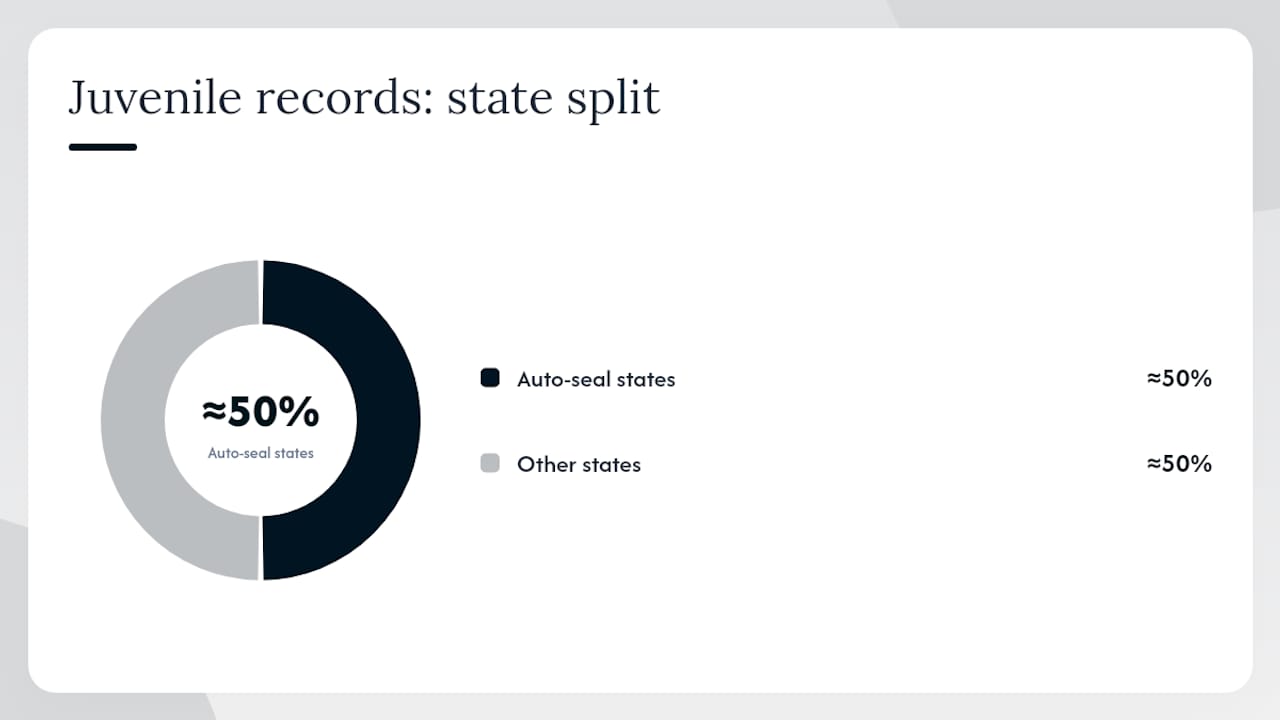
Waiting periods vary widely. Some states require two years after sentence completion; others require five or more. Juvenile records get different treatment: LawInfo notes that roughly half of states automatically seal many juvenile records, while others require a petition or apply age-based rules.
A few state contrasts worth knowing:
- California allows expungement for many misdemeanor and felony convictions after probation, but certain offenses (child sex crimes, for example) are permanently excluded.
- Texas limits expungement mostly to arrests that did not result in conviction; convictions generally qualify only for an "order of nondisclosure" (the Texas equivalent of sealing).
- New York expanded its sealing statute in 2017 to cover certain convictions after a ten-year waiting period, but expungement in the traditional sense is narrow.
- Pennsylvania and Michigan have both passed Clean Slate legislation that automates sealing for qualifying records after a waiting period.
Pro Tip: Before calling an attorney, visit your state court's self-help center page or the state repository's public portal. Most states post eligibility charts that let you filter by offense type and case outcome in under five minutes.
3. How to file a petition: the step-by-step process
File in the court where the prosecution originally took place. Each case typically needs its own petition, so if you have three separate cases, expect to file three separate documents.
- Locate your case number. Pull it from your sentencing paperwork, a prior attorney's file, or the court clerk's public terminal. You can also search Registryrecognizer to find booking and charge details before contacting the clerk.
- Get your disposition documents. Request a certified copy of the final disposition from the clerk. This confirms whether the case ended in dismissal, conviction, or diversion completion.
- Complete the petition forms. Most state courts post fillable PDF forms on their self-help pages. Fill in the case number, offense, disposition date, and the specific relief requested (expungement or sealing).
- File with the clerk and pay the filing fee. Fees vary by state and county. Some courts waive fees for low-income petitioners; ask the clerk about a fee-waiver form when you file.
- Serve the prosecutor. Most states require you to notify the district attorney's office. The clerk can tell you the required service method (certified mail is common).
- Attend the hearing, if required. Some states grant expungement by default if the prosecutor does not object within a set period. Others schedule a hearing regardless. Bring your certified disposition, the filed petition, and any supporting letters.
Illinois Legal Aid Online notes that outstanding court fees or unpaid restitution can lead a judge to deny expungement, even when you are otherwise eligible. Sealing petitions tend to be less strict on this point, but confirm your local rules before filing.
Pro Tip: Call the clerk's office before your first visit and ask: "What forms do I need for an expungement or sealing petition, and does this court accept remote or e-filing?" Many courts now allow online submission, which saves a trip and gets your filing date stamped the same day.
4. Who can still see a sealed or expunged record?
Sealing and expungement are not invisible shields. Both remedies have exceptions, and understanding them prevents unpleasant surprises.
For sealed records, the standard exceptions include law enforcement agencies, prosecutors, criminal courts, certain licensing boards (medical, legal, financial), federal agencies, and immigration authorities. A fingerprint-based check, the kind run by the FBI or a state licensing board, can return a sealed record even when a name-based public search returns nothing.
For expunged records, the exceptions are narrower but still real. Law enforcement can often access expunged records for purposes of a later prosecution. Federal agencies, including immigration, may retain their own copies. FindLaw points out that court orders direct government agencies to seal or destroy their copies, but private entities such as newspapers and unofficial aggregators may retain published reports indefinitely.
When you must still disclose. Certain licensing applications (nursing, law, teaching, financial services) ask about arrests or convictions regardless of sealing or expungement. Immigration forms such as the N-400 (naturalization) and DS-260 (immigrant visa) require disclosure of arrests even if the record was expunged. Always read the exact question on the form and consult an immigration attorney if you are not a U.S. citizen.
Sealed and expunged records can also be used in a later criminal prosecution to establish a pattern or to support sentencing enhancement. The record does not disappear from the justice system's institutional memory even when it disappears from public view.
5. How sealing or expungement affects employment, housing, and licensing
The practical difference between sealing and expungement shows up most clearly in three areas: job applications, rental screenings, and professional licensing.
| Dimension | Sealing | Expungement |
|---|---|---|
| Legal effect | Record exists; access restricted | Record destroyed or removed from public indexes |
| Public accessibility | Hidden from general public | Generally not visible in public searches |
| Who still sees it | Law enforcement, licensing boards, federal agencies, fingerprint checks | Law enforcement (often), federal agencies, immigration |
| Typical eligibility | Broader; often available for some convictions | Narrower; often limited to dismissals or first-time nonviolent offenses |
| Process | Petition (or automatic under Clean Slate laws) | Petition required in most states |
For a standard employment background check run through a consumer reporting agency, a sealed or expunged record usually does not appear. The problem arises with fingerprint-based checks. If an employer is federally regulated (banking, healthcare, education, transportation), their background check goes through the FBI's fingerprint database, which may still return a sealed record. An expunged record is less likely to appear there, but it is not guaranteed to be absent.
Landlords using third-party tenant-screening services typically run name-based checks. A sealed or expunged record generally will not show up. However, if a news article about the arrest was published and indexed, it remains searchable regardless of what happened in court.
Professional licensing boards for fields like nursing, law, and financial advising often have statutory authority to access sealed records. The licensing application itself may require disclosure. FindLaw confirms that sealing or expunging records can improve job and housing prospects but does not affect private publications or certain government checks.
Pro Tip: After your order is granted, request a certified copy of the expungement or sealing order and keep several copies. If a background check returns an error or an old record, you can present the order directly to the employer or landlord to correct it on the spot.
6. How to confirm whether your record is sealed or expunged
Verifying the status of your record takes a few targeted steps. Do not assume the order was implemented just because the judge signed it; agencies sometimes need follow-up.
- Find your case number. Check your copy of the petition, your sentencing paperwork, or the court's public online docket.
- Contact the court clerk. Ask specifically: "Has the expungement or sealing order been implemented, and can I get a certified copy of the order?" Some clerks can confirm status over the phone; others require a written request.
- Request a certified disposition. A certified copy of the final order is the document you will need if a background check ever returns an incorrect result.
- Check the state central repository. Most states maintain an online criminal history search tool through the state police or department of justice. Run your own name to see what appears. Justia identifies court clerks and state criminal record repositories as the primary verification sources.
- Follow up with agencies named in the order. If the order directed the arresting agency or a specific department to destroy records, call them to confirm compliance.
When emailing or calling the clerk, a useful template: "I am requesting confirmation that the expungement/sealing order in case number [XXXX], entered on [date], has been implemented and that the record no longer appears in your public index. Please advise on how to obtain a certified copy of the order."
7. Automatic sealing and Clean Slate laws: what changes for you
Clean Slate legislation represents the most significant shift in record-clearing law in decades. The core idea is simple: instead of requiring individuals to file a petition, the state automatically seals qualifying records after a defined waiting period and a clean record during that time.
Several states have Clean Slate laws that automatically seal certain eligible records after a clean waiting period with no new offenses. Michigan's law, enacted in 2021, expanded eligibility and introduced automatic sealing for certain convictions. Other states including California, Delaware, and Utah have passed similar measures covering nonviolent misdemeanors and, in some cases, nonviolent felonies.
Illinois Legal Aid Online notes that experts still recommend filing a petition when automatic relief does not apply, because a petition can secure broader relief than the automatic process covers.
When automatic sealing applies, you do not need to file anything. The state's repository updates on its own schedule, which can take months after the waiting period ends. If you need the record cleared urgently (for a job offer or housing application), filing a petition is faster than waiting for the automatic process to catch up. Check your state's Clean Slate implementation timeline before deciding.
8. Typical costs, timelines, and likely outcomes
Filing fees for expungement or sealing petitions generally range from under $100 to several hundred dollars depending on the state and county. Some jurisdictions charge per case; others charge a flat fee regardless of how many cases are on the petition. Fee waivers are available in many courts for petitioners who meet income thresholds.
Attorney fees vary considerably. A straightforward expungement of a single dismissed case in a state with a simple process can cost less than a few hundred dollars if handled by a legal-aid clinic. A contested petition involving a felony conviction, multiple cases, or a prosecutor's objection can run into the thousands.
Timeline from filing to final order typically runs from a few weeks to several months. Courts with heavy dockets, states that require mandatory hearings, and cases where the prosecutor objects all extend the timeline. Automatic Clean Slate implementations can take longer because they run on the state's own processing schedule.
Three likely outcomes to prepare for:
- Grant: The court issues the order; you follow up with each named agency to confirm implementation.
- Partial grant (sealing instead of expungement): Common when the offense qualifies for sealing but not full expungement. If a judge denies expungement, courts will often allow a sealing request as a fallback, per Illinois Legal Aid Online.
- Denial: You can typically refile after a waiting period or appeal. A denial is also the point at which alternatives like a pardon or certificate of rehabilitation become worth exploring.
9. When sealing and expungement aren't available: alternatives to consider
If your offense category or criminal history puts expungement and sealing out of reach, three alternatives are worth knowing.
- Executive pardon / clemency. Governors grant state pardons; the President grants federal pardons. A pardon forgives the conduct and can restore civil rights (voting, firearms in some states), but it does not erase the record from public view. It is conceptually distinct from expungement. Justia explains that pardons address guilt and sentencing, not record accessibility.
- Certificate of rehabilitation. Available in California and a handful of other states, this is a court order declaring that a person has been rehabilitated. It does not seal or expunge the record, but it can support a pardon application and carries weight with some licensing boards.
- Set-aside or vacatur. Some states (Arizona, for example) allow a court to set aside a conviction, which changes the record to show the conviction was set aside but does not destroy it. The practical effect on background checks is limited but better than nothing.
If you do not qualify for any of these remedies right now, a short next-steps checklist:
- Contact your state or county legal-aid office to confirm ineligibility and ask about any recent statutory changes.
- Check your state's pardon board website for application timelines and eligibility criteria.
- If a professional license is the primary concern, contact the licensing board directly to ask whether a certificate of rehabilitation or a letter of explanation affects their review.
- If you are not a U.S. citizen, consult an immigration attorney before filing anything, since record-clearing actions can have immigration consequences.
If you need to check what public arrest records currently show before taking any of these steps, Registryrecognizer lets you search booking and charge details by county so you know exactly what information is publicly indexed.

What I think you should actually do
The expungement vs. sealing debate often gets framed as a binary choice, but in practice most people do not get to choose. The offense type and case outcome determine which remedy is available, and in many states only one option exists for a given record. The real decision is whether to pursue the strongest available remedy now or wait for a potentially better option later.
My practical take: if expungement is available for your record, pursue it rather than settling for sealing. The difference in who can access the record is real, especially for fingerprint-based checks tied to licensing or federal employment. Sealing is a meaningful improvement over an open public record, but it is not the same as removal.
Gather your documentation before you call an attorney or walk into a legal-aid clinic. A certified copy of your disposition, your case number, and a list of all cases you want cleared will cut your consultation time in half and reduce the chance of a procedural delay. If the prosecutor's office is likely to object, an attorney is worth the cost. If the case was dismissed and your state has a straightforward petition process, a legal-aid clinic or a court self-help center can often walk you through it at no cost.
For edge cases, including immigration status, professional licensing, or offenses that cross state lines, always confirm with an attorney who knows your state's current statute. Clean Slate laws are changing eligibility rules faster than most online guides can track.
Sources
- Before filing for expungement or sealing (FAQ) | Illinois Legal Aid Online
- Expungement and Sealing of Criminal Records & Legal Procedures | Criminal Law Center | Justia
- Criminal Record Clearing: The Terminology | NCSL
- What's the Difference Between Expungement and a Sealed Court Record? | FindLaw
- What's the Difference Between Expunged vs. Sealed Records? | LawInfo
This article is general information, not a substitute for advice from a qualified lawyer. Consult a qualified legal professional about your own circumstances before acting on anything here.
Recommended
- SHAWANO COUNTY SEEKS TO ENFORCE COURT ORDER AFTER VIOLATION INCIDENT · Registry Recognizer
- Jimenezmaciel, Crystal Roxanne charged with Vandalism:deface property (F) · Registry Recognizer
- OESER, AIMEE MARIE charged with VUCSA -GM Knowinly possess · Registry Recognizer
- Dangelo Sanchez charged with PC 3455(A) - VIOLATION OF POST RELEASE SUPERVISION · Registry Recognizer