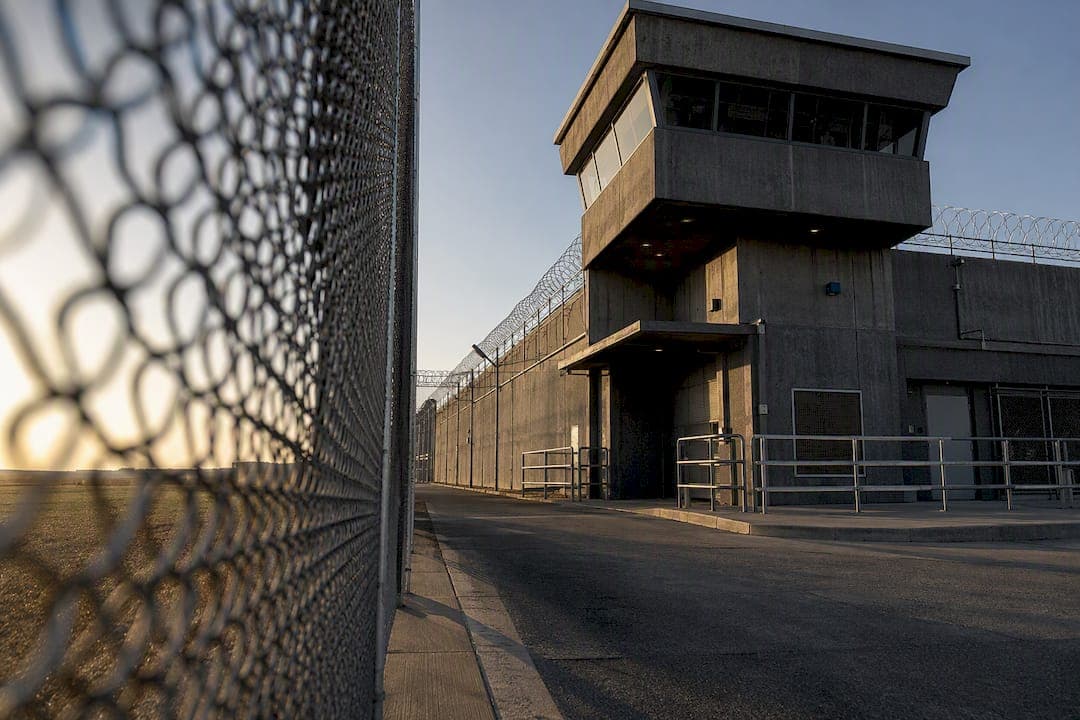
Start with the right agency, not a search engine. Federal inmates are listed on the BOP Federal Inmate Locator; state prison addresses come from your state's Department of Corrections directory; county jail addresses live on the county sheriff's own website. If you don't know which one applies, find the county of arrest first. That single fact determines which locator will actually work.
TL;DR:
- Confirm the arresting jurisdiction first, then directly use the appropriate locator tool based on federal, state, or county levels for accurate address retrieval.
- Verify addresses through official .gov sources and cross-check phone numbers and facility types before visiting or mailing to ensure information is current.
- County jails usually have a single physical location, but state and federal facilities may have multiple sites, requiring careful confirmation of the exact site.
- Calling the facility or sheriff's non-emergency line typically provides the most up-to-date and precise information, often faster than online searches.
- Use Registry Recognizer or similar tools to narrow down the facility and address quickly but always complete verification on official government pages before acting.
Table of Contents
- Where to Search for a Jail Address: Federal, State, and County Tools
- How to Find a Jail Address in Four Steps
- Verifying an Address Before You Rely on It
- Why Jail and Prison Addresses Aren't Always What They Seem
- What years of tracking county records taught us about jail searches
- Find the Facility Name Fast, Then Confirm It Officially
- Sources
Where to Search for a Jail Address: Federal, State, and County Tools
Each level of government runs its own locator, and they don't overlap. Using the wrong one is the most common reason people come up empty.
The BOP Federal Inmate Locator covers people incarcerated in the federal system from 1982 to the present, and it will show you the name and address of the specific federal facility holding them. Justice.gov backs this up with a broader page that links to the Federal Prison Facility Locator and other federal lookup tools, including maps you can use to find a facility's exact address. The BOP locations search is worth bookmarking separately, since it lets you pull up a federal facility's address even without an inmate's name.
State prisons work differently. Every state runs its own Department of Corrections, and each one publishes a directory of state-run facilities, though the layout, search fields, and terminology vary widely from state to state. New York's setup is a good example: the New York State Commission of Correction publishes a county jail directory with physical addresses for every county jail in the state, not just the state prisons.
County jails are their own category entirely, and this is where most searches actually land, since county jails hold the vast majority of people in pretrial detention or serving short sentences.
- County sheriff pages list booking logs, current detainees, and facility addresses.
- San Diego County's sheriff department, for instance, publishes full addresses and phone numbers for each of its detention facilities.
- Local police lockups or municipal court holding cells sometimes hold someone briefly before a transfer to the county jail, so a fresh arrest may not show up at the county level right away.
How to Find a Jail Address in Four Steps
Finding an address quickly comes down to sequence. Skip a step and you'll waste time on the wrong site.
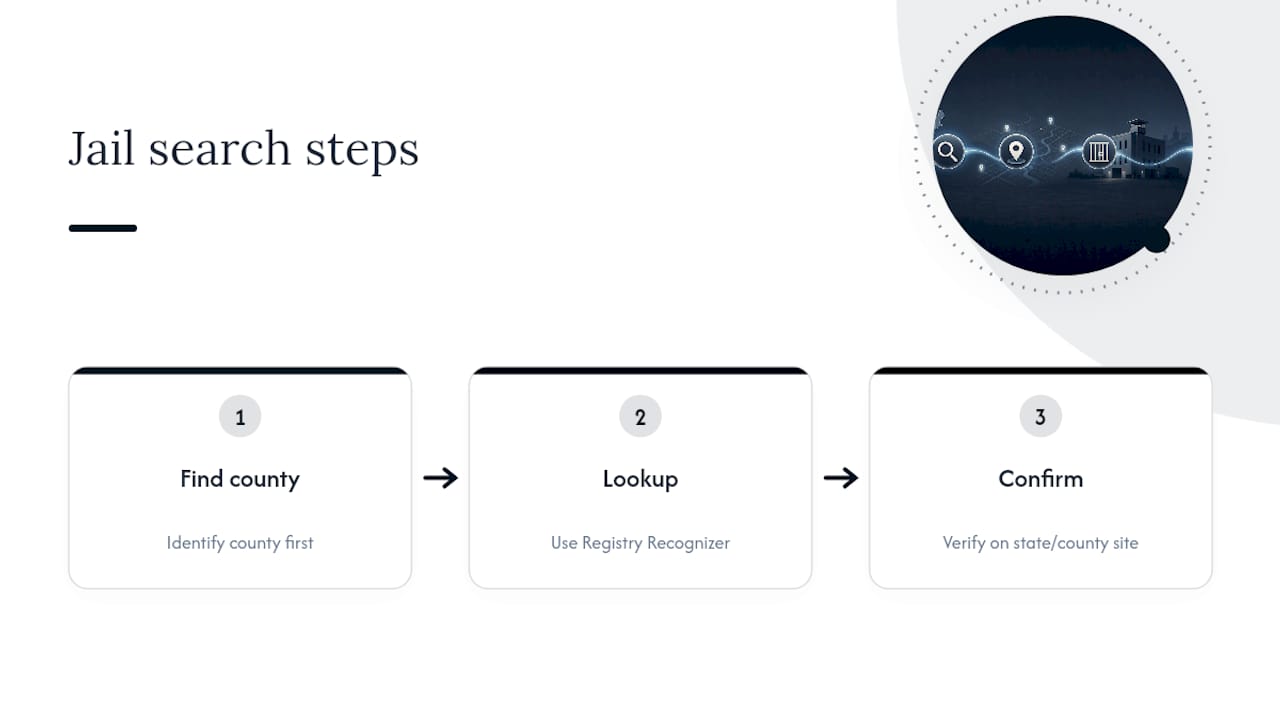
- Identify the county of arrest. Check the arresting agency named on a police report, a local news story, or even a traffic citation if a vehicle was involved. The U.S. correctional system is decentralized, so there's no single national database that covers every county jail. The county is your anchor point.
- Search the right directory by name or booking number. Once you know the county, go straight to that county sheriff's inmate search, or the state DOC facility list if the person landed in a state-run institution rather than a county jail.
- Check BOP if the case is federal. Federal charges (drug trafficking across state lines, bank robbery, immigration offenses) usually mean the BOP locator is the tool, searchable by name or register number.
- Call the sheriff's non-emergency line to confirm. If the online listing is vague, outdated, or missing, a phone call clears it up faster than any amount of scrolling.
That last step matters more than people expect. Booking logs and facility contact pages get updated on different schedules across counties, and a five-minute call often beats twenty minutes of searching three different sites.
Verifying an Address Before You Rely on It
An address you find online is only useful if it's current and correct, and that means checking the source before you act on it.
Look for a .gov domain and HTTPS in the URL bar before trusting any address for a visit or piece of mail. Government agencies use .gov domains specifically because they're restricted and verified, which is more than you can say for a random directory site that scraped old data years ago.
- Cross-check the facility's phone number and address on both the state DOC page and the county sheriff page if both list the same facility.
- Confirm whether the address is the main facility, a satellite annex, or a mailing-only address, since these can differ even within the same jail system.
- Recheck the listing date if the page shows one; correctional facility information changes often enough that a stale page can send you to the wrong door.
Pro Tip: Call the facility or the county sheriff's non-emergency number before driving anywhere. Ask for the exact visiting address and current hours in the same call, since visiting entrances sometimes differ from the mailing address listed online.
Why Jail and Prison Addresses Aren't Always What They Seem
County jails, state prisons, and federal institutions each follow different address patterns, and mixing them up is an easy mistake. County jails hold people short term, usually pretrial or serving sentences under a year, and typically sit at one central address per county. State prisons and federal institutions house longer sentences and often operate multiple campuses under one name, which is exactly why the difference between a jail and a prison matters before you start searching.
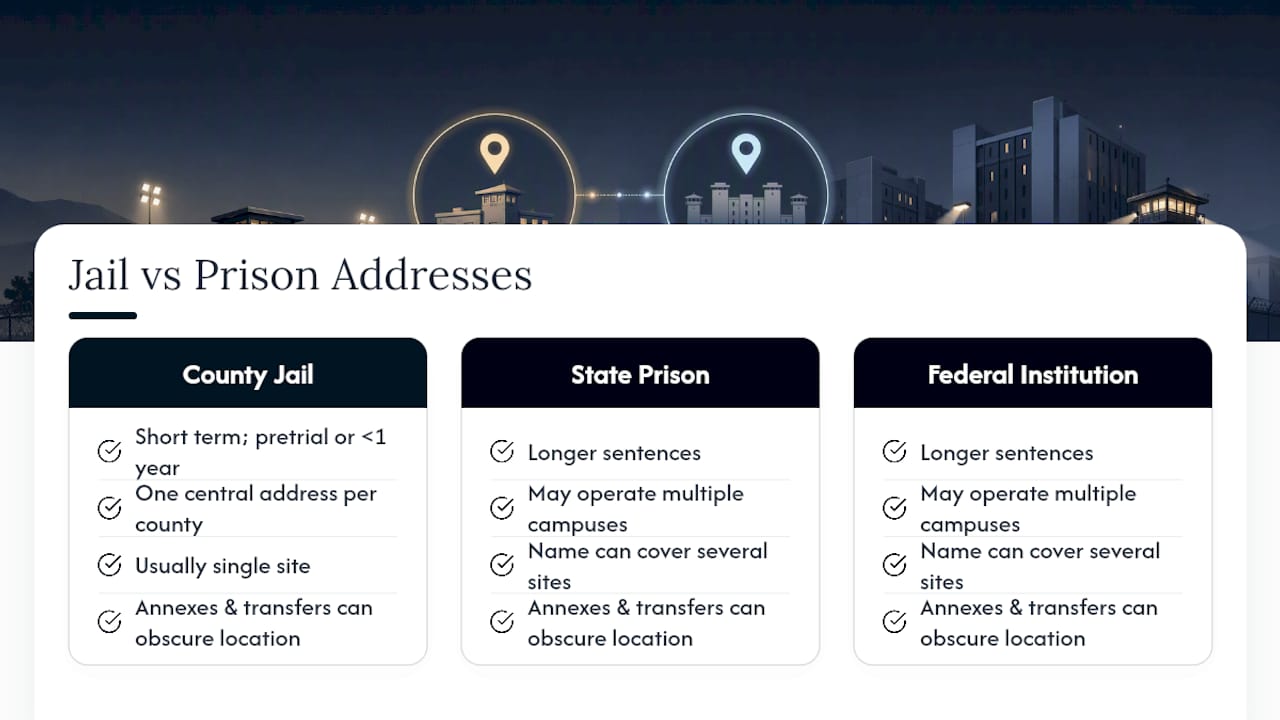
Annexes complicate things further. A booking record might list the jail system's general name without specifying that the person is actually held at a work-release center or a hospital annex tied to that system. Transfers add another wrinkle: online locators can lag behind an actual transfer, so an address that was correct last week might not be correct today. Confirming by phone with the county sheriff remains the most reliable way to nail down where someone actually is right now.
What years of tracking county records taught us about jail searches
Registry Recognizer maintains county-focused arrest and facility records across the country, and one pattern shows up constantly: people waste time hitting the wrong locator before they even know the county. Sean's guides on finding federal and county inmates grew out of watching that same mistake repeat itself, arrest after arrest, county after county.
The lesson isn't complicated. Nail down the county first, then use Registry Recognizer as a quick preliminary lookup, and always confirm the final address on the official state or county page before you rely on it for a visit or mail.
— Sean
Find the Facility Name Fast, Then Confirm It Officially
Once you know a county, the slowest part of this whole process is usually just figuring out which facility actually holds the person. Registry Recognizer narrows that down quickly by surfacing arrest and booking records tied to a specific county, so you're not guessing at a facility name before you even start verifying an address.
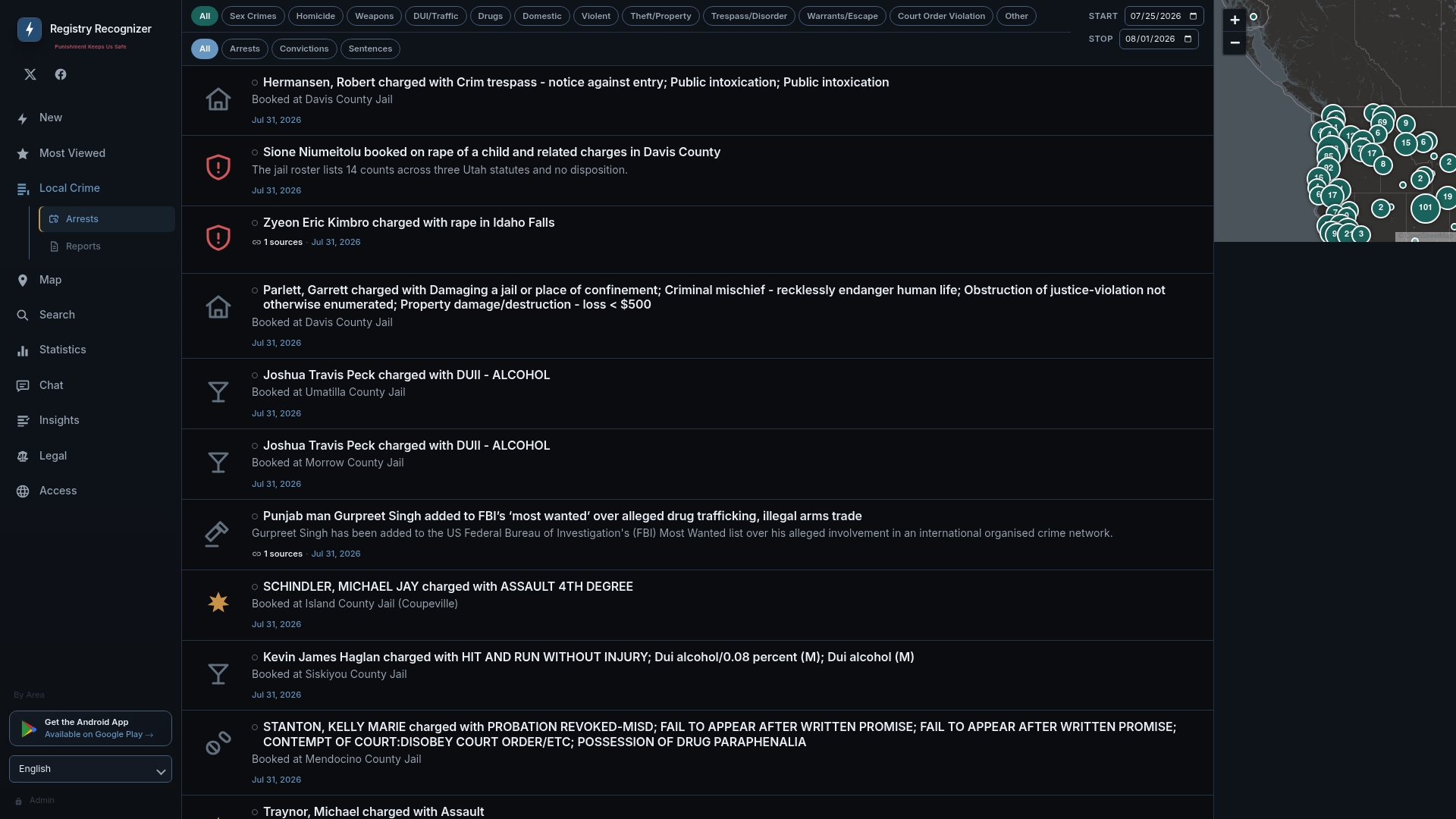
That's the honest scope of what it does: it points you toward the likely county and facility name, saving you the first, most frustrating leg of the search. From there, the job shifts to verification. Take the facility name to the state DOC page or the county sheriff's site, confirm the physical address listed there, and call the non-emergency line if anything looks unclear. Start by searching Registry Recognizer's database for the name or county you're working with, then finish the job on the official .gov page before you make a trip or send mail.
Sources
Bookmark these before you need them again:
- BOP Federal Inmate Locator
- Justice
- New York State County Jails | Commission of Correction
- Detention Facilities | San Diego County Sheriff